
What Is Choju-giga? Japan’s Oldest Manga Explained (Famous Animal Scroll)
日本語版はこちら: 鳥獣戯画とは?なぜ面白いのか|日本最古の漫画の3つの見どころ
Choju-giga (Choju Jinbutsu Giga) is a set of picture scrolls created about 900 years ago. It features animals—such as rabbits and frogs—behaving like humans. Often described as “Japan’s oldest manga,” it has long been loved by audiences both in Japan and abroad.
At first glance, the scrolls may seem like simple, humorous scenes of animals at play. However, many scholars believe they also reflect the lives, values, and social dynamics of people in medieval Japan through highly sophisticated artistic techniques.
In this article, we explore what Choju-giga is, why it is called the oldest manga, and what makes it so fascinating.
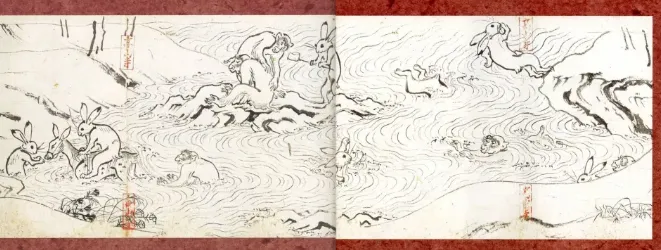
What Is Choju-giga?
Choju-giga is one of Japan’s most famous picture scrolls and is believed to have been created between the Heian and Kamakura periods (12th–13th centuries). It is also one of the oldest surviving examples of this art form. Because of its approachable charm and artistic excellence, it has been designated a National Treasure.
The original scrolls are carefully preserved at Kozan-ji Temple in Kyoto. They are occasionally displayed in major museums, such as the Tokyo National Museum and the Kyoto National Museum.
The work consists of four scrolls—commonly referred to as Scrolls A, B, C, and D—each with its own style and subject matter. While all four were once attributed to the monk Toba Sojo Kakuyu, it is now widely believed that they were created by different artists in different periods. The true authorship remains unknown.
Among them, Scroll A, where animals behave like humans, is by far the most famous. It is the version most often featured in textbooks and exhibitions and is what most people think of when they hear “Choju-giga.” It also stands out for its popularity and technical excellence of the four. Scroll B contains more realistic depictions of animals, while Scrolls C and D feature more human-centered scenes.
Why Is Choju-giga Called “the Oldest Manga”?
The idea that Choju-giga is “the oldest manga” mainly comes from Scroll A, where animals wrestle, run, argue, and sometimes even perform ritual-like activities. As you follow the scroll from right to left, the story unfolds seamlessly, almost like a comic strip without panels. There is no dialogue or written explanation. Everything is conveyed through images alone. This visual storytelling is one of the reasons Choju-giga is often considered a precursor to modern manga. It is also popular outside Japan as “the origin of manga.”
Scenes from Scroll A
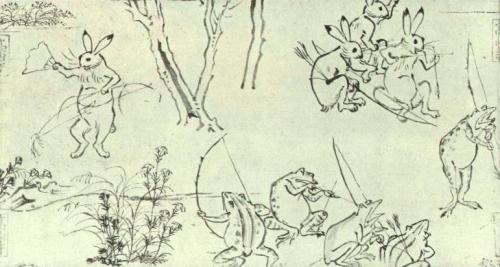
The Rabbit and Frog Archery Contest
Archery contests have long been enjoyed as a form of entertainment. The rabbits are full of competitive spirit, as if determined not to lose to the frogs. Some frogs watch with arrows tucked into their belts, while others lean forward eagerly to follow the action.
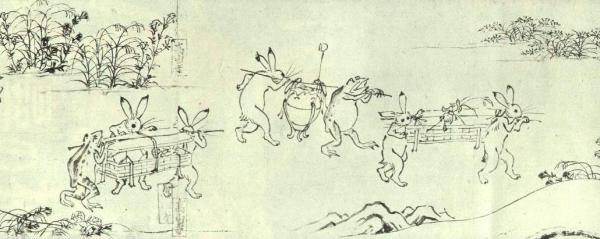
The Banquet
After the contest, it’s time for a feast. Two young rabbits carry a large box, with two birds tied to its lid.
Behind them, a frog and a rabbit struggle to carry what appears to be a heavy jar of sake. You can almost imagine their conversation:
“Careful, you’ll spill the sake!”
“My shoulder hurts… this is tough!”
Another box follows behind, so full of food that it cannot even be closed.
The Grand Sumo Match
In this scene, a rabbit and a frog are locked in a sumo match. The frog attempts a leg trip, but it doesn’t work. In desperation, it suddenly bites the rabbit’s ear.
“That’s cheating! Let go!”
The surrounding rabbits protest, but the frog ignores them.
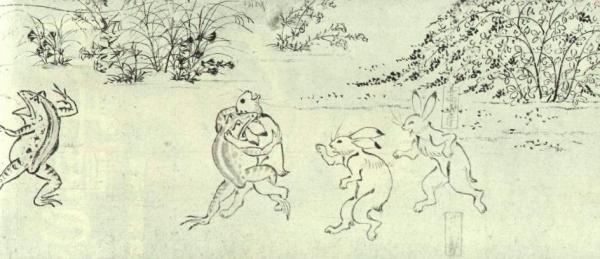
Through scenes like these, Scroll A brings its story vividly to life using only movement and expression.
Key Highlights of Choju-giga
1. Humor and Satire Through Animal Characters
One of the most appealing aspects of Choju-giga is its humorous depiction of animals behaving like humans. Watching them play and interact can feel surprisingly relatable—almost like watching children.
At the same time, many believe the scroll also contains elements of satire. It may reflect aspects of medieval society, including social hierarchies, rituals, and power structures. By portraying these aspects of society through animals, the artist could express such ideas indirectly yet effectively.
This allows viewers, even today, to see echoes of their own society in the scenes.
2. Open Interpretation Without Words
Choju-giga contains no written text at all. Yet the flow of each scene is clearly conveyed through composition and movement. This invites viewers to interpret the story freely. For example, there are multiple interpretations of what the rabbit and monkey are doing in the famous river scene from Scroll A. This openness is one of the work’s enduring charms.
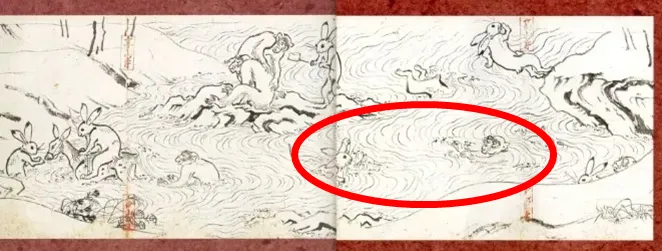
For more details on this scene, please see “What Are the Rabbit and Monkey Doing in Choju-giga?”
3. Expressive Power of Simple Lines
At first glance, the drawings may seem simple. However, they demonstrate remarkable technical skill. With just a few lines, the artist captures movement, emotion, and relationships with precision.
The smooth, flowing brushwork naturally guides the viewer’s eye, creating rhythm and continuity throughout the scroll. This ability to achieve rich expression with minimal means is one of the defining strengths of Choju-giga.
The Mysteries of Choju-giga
Many mysteries still surround Choju-giga. The exact date of its creation and its authorship remain unknown. It is also unclear why four stylistically different scrolls were compiled into a single work.
Another intriguing question is why this seemingly playful work was preserved for centuries at Kozan-ji Temple alongside important religious materials. This raises the possibility that it may contain deeper religious or philosophical meanings.
These mysteries are explored in more detail in “The Mysteries of Choju-giga: Hidden Meanings in Japan’s Famous Animal Scroll.” Together with its three key highlights, they continue to captivate people.
Enjoy Choju-giga Through Picture Books
Choju-giga is a long picture scroll, and it can be difficult to appreciate all of its details when viewing the original. For this reason, many readers enjoy exploring the story through illustrated books that present the scenes in an easy-to-follow format.
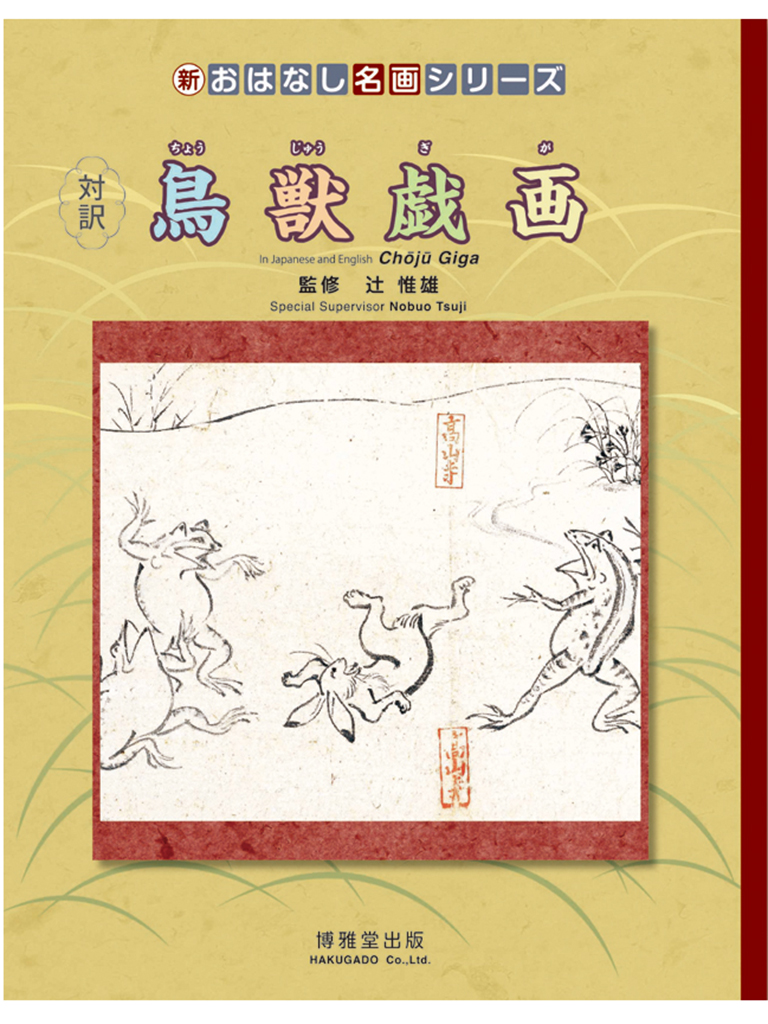
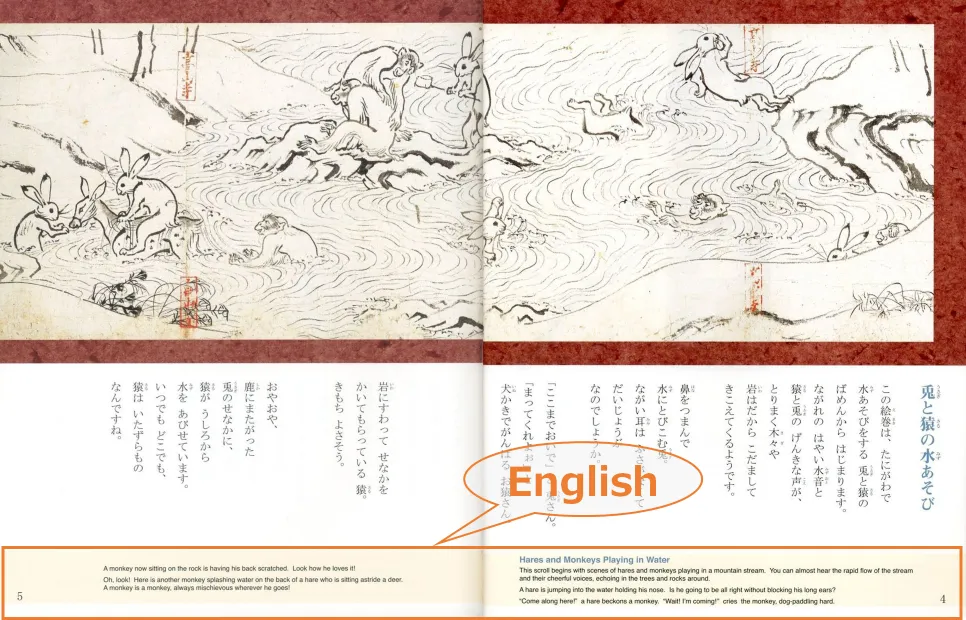
One such book is Choju Giga: The Scroll of Frolicking Animals. This edition introduces the entire scroll A in a way accessible to both children and adults.
With English translations included, the book is also popular among international readers who want to learn about Japanese culture while enjoying the playful world of Choju-giga.
Learn More About Japanese Art
- Choju-giga Picture Book: The Scroll of Frolicking Animals – Often Called the World’s Oldest Manga
- What Are the Rabbit and Monkey Doing in Choju-giga?
- The Mysteries of Choju-giga: Hidden Meanings in Japan’s Famous Animal Scroll
- Hokusai’s Mt. Fuji Picture Book: The Thirty-Six Views of Mount Fuji and Fugaku Hyakkei
- Katsushika Hokusai’s Life in 3 Minutes | Japanese Ukiyo-e Master
- Mount Fuji Worship: Why Japan’s Sacred Mountain Is Revered