Katsushika Hokusai’s Life in 3 Minutes | Japanese Ukiyo-e Master
日本語版はこちら: 葛飾北斎とは?3分で分かる天才浮世絵師の生涯
Katsushika Hokusai (1760–1849) was one of Japan’s greatest ukiyo-e artists and the creator of the world-famous series Thirty-Six Views of Mount Fuji. This short article offers a quick introduction to the life and art of the famous ukiyo-e master.
Hokusai’s Early Life
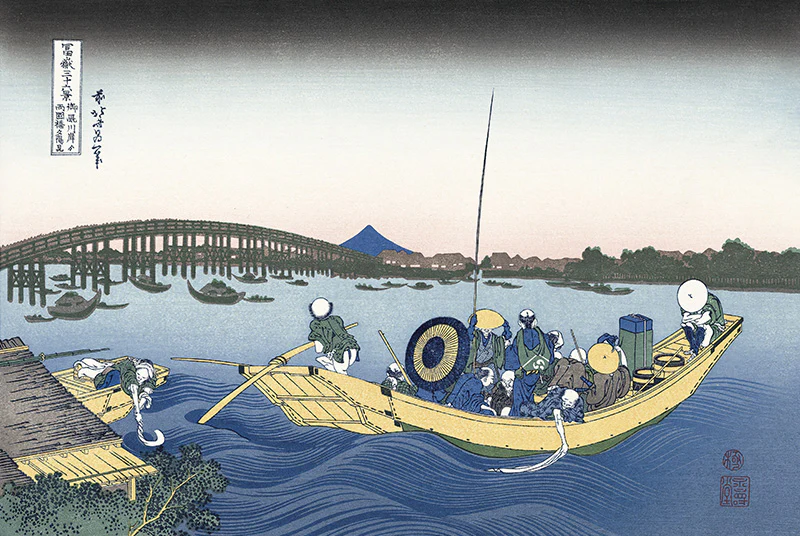
Katsushika Hokusai was born in 1760 in Honjo, an area of Edo that is now part of Kamezawa in Sumida, Tokyo. The Sumida River flowed nearby, and on clear days Mount Fuji could be seen in the distance.
Before Hokusai was born, Honjo was said to be such a damp and lonely place that people joked, “The only time there are no mosquitoes in Honjo is at New Year.” Over time, however, wetlands were reclaimed, and after Ryogoku Bridge was built across the Sumida River, the Honjo and Fukagawa areas developed rapidly.
By the time Hokusai was growing up, Edo had become a huge city with a population of about one million. The area near Ryogoku Bridge, where he spent his childhood, was lively and full of entertainment such as shows, theater, and sumo wrestling.
His Start as an Ukiyo-e Artist
There are various theories about Hokusai’s family background, such as the idea that his father was a mirror maker serving the Tokugawa shogunate, but none of them is certain. In fact, little is known about the first half of his life.
Around the age of fourteen, he became an apprentice to a woodblock carver and learned how to carve printing blocks. At nineteen, he entered the studio of one of the most popular ukiyo-e artists of the time. After his teacher died when Hokusai was thirty-three, he continued to study widely and produced book illustrations, comic pictures, landscapes, and pictures of beautiful women. He first used the name “Hokusai” at thirty-nine, and began using the full name “Katsushika Hokusai” at forty-six.
After the age of fifty, he gained many more students, and people from across Japan came to learn from him. His published drawing manual, Hokusai Manga, became extremely popular. By around the age of seventy, he had changed his artist name more than twenty times and had already produced a huge number of works.
Thirty-Six Views of Mount Fuji and His Masterpieces
In the preface to One Hundred Views of Mount Fuji, Hokusai wrote that only at the age of seventy-three had he finally begun to understand the true structure of birds, animals, insects, fish, and plants. He believed that if he kept working hard, he would improve even more after the age of eighty. As this suggests, many of the works now considered his masterpieces were created after he turned seventy.
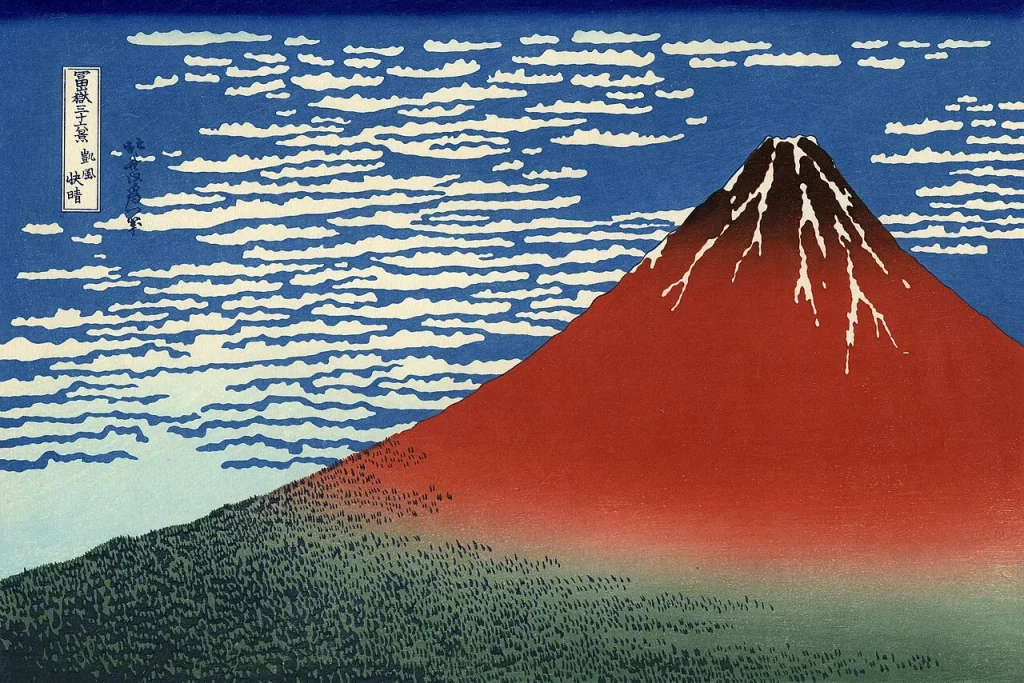
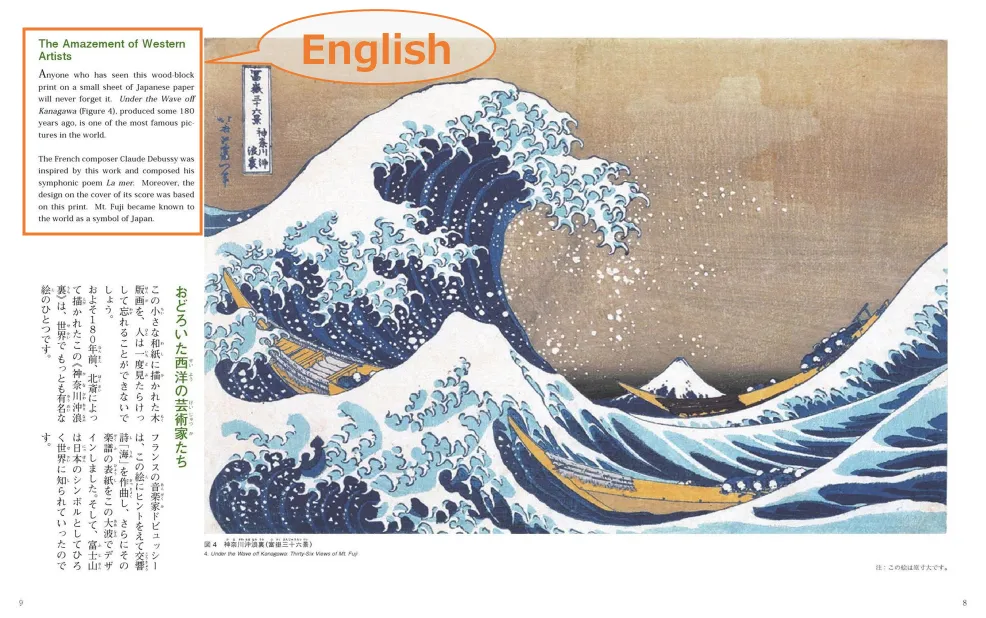
His major works include Thirty-Six Views of Mount Fuji, which presents many different views of Mount Fuji; A Tour of the Waterfalls of the Provinces, which captures the changing forms of water; A Thousand Pictures of the Sea, which depicts the sea and fishermen; Remarkable Views of Bridges in Various Provinces; and the picture book One Hundred Views of Mount Fuji, which shows both the mountain and the lives of the people who lived around it. These works were appreciated overseas at an early stage and later had a strong influence on Impressionist painters in the late nineteenth century.
Hokusai’s Later Years and His Daughter Oi
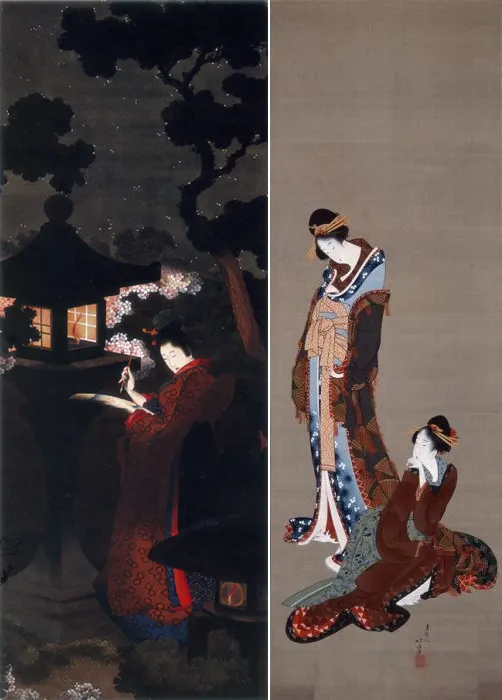
Hokusai is said to have claimed that he moved house ninety-three times in his life, sometimes even three times in a single day. He also traveled frequently. After the age of eighty, he often visited Obuse in Shinshu, where his wealthy patron Takai Kozan lived. There he created what became his final major work, the ceiling painting Phoenix Gazing in All Directions at Ganshoin Temple.
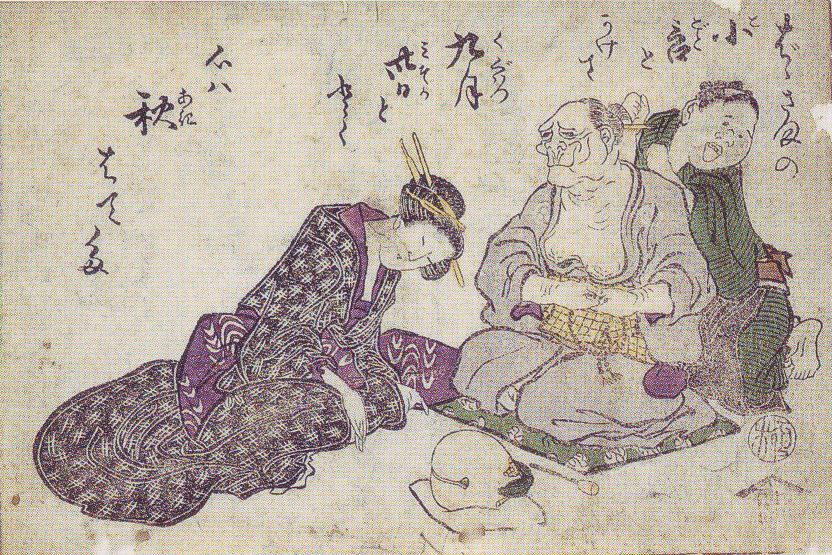
In his later years, Hokusai was cared for by his third daughter, the painter Oei, whose artist name was Oi. She is said to have resembled her father in caring little about appearance, housing, or even food. According to tradition, they lived together in a small house and often called out “Oi!” to each other, a casual Japanese call similar to “Hey!” Hokusai continued painting passionately until his death in Asakusa at the age of ninety.
Learn More About Hokusai
If you would like to explore Mount Fuji through art, Hakugado Publishing offers a book that introduces the masterpieces of the ukiyo-e artist Katsushika Hokusai, including many works from the famous series Thirty-Six Views of Mount Fuji.
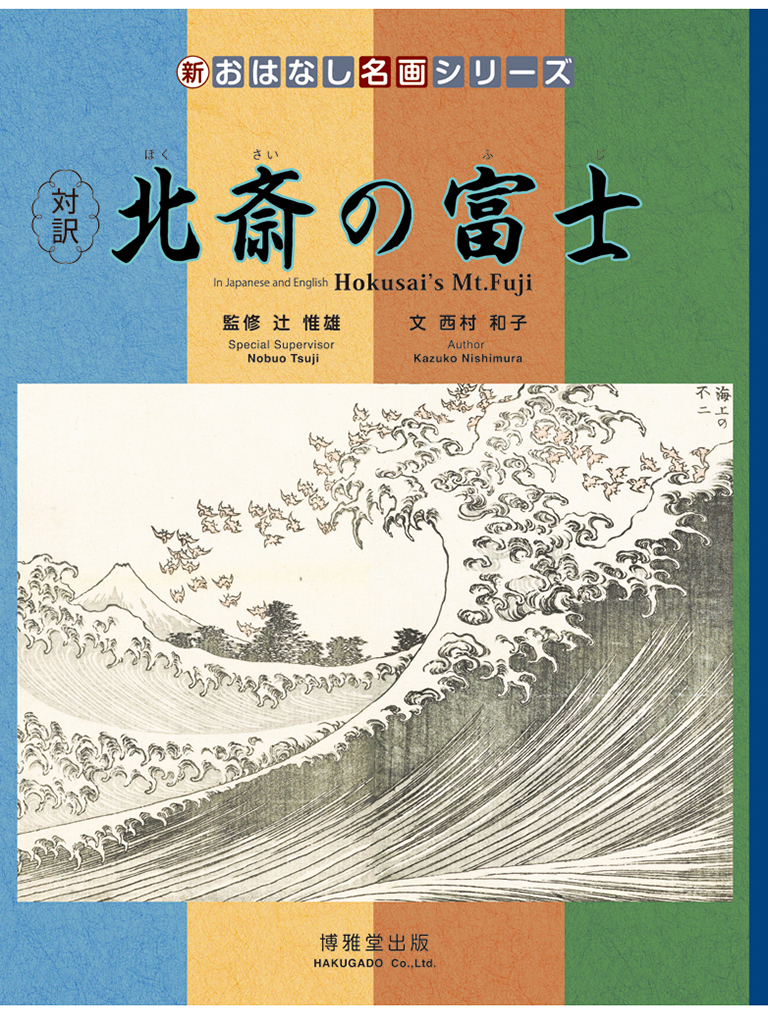
Hokusai’s Mt.Fuji in English and Japanese
Large size (B4 extended format), 36 pages
before-tax price: ¥2,000
This book introduces masterpieces by the Edo-period ukiyo-e master Katsushika Hokusai, many of which feature Mount Fuji while also offering a glimpse into everyday life in Edo Japan.
You May Also Enjoy
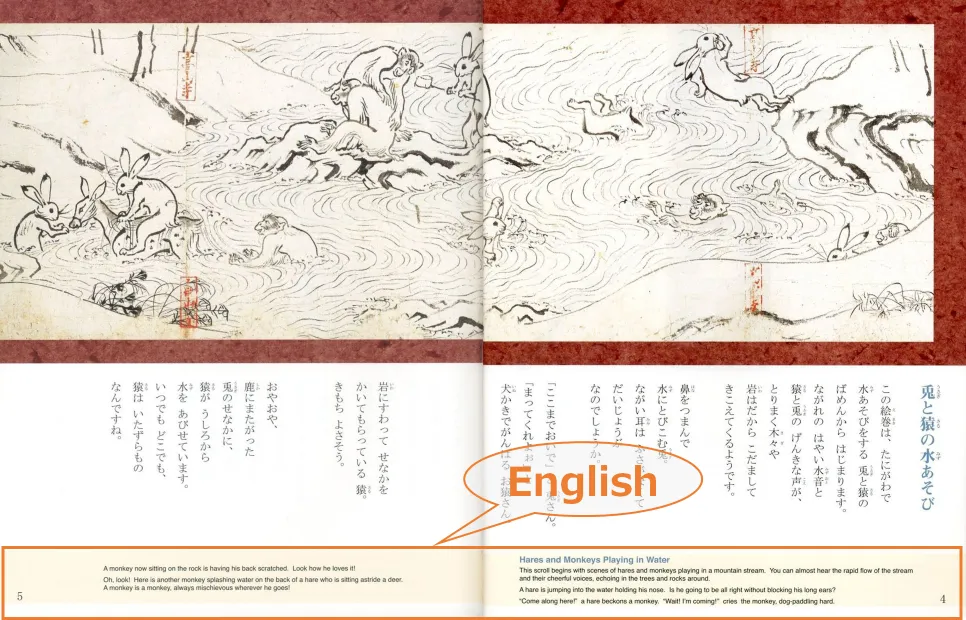
If you are interested in Japanese art, you may also enjoy a book about Choju-giga, a scroll featuring frolicking animals, often regarded as the origin of manga, produced about 900 years ago.
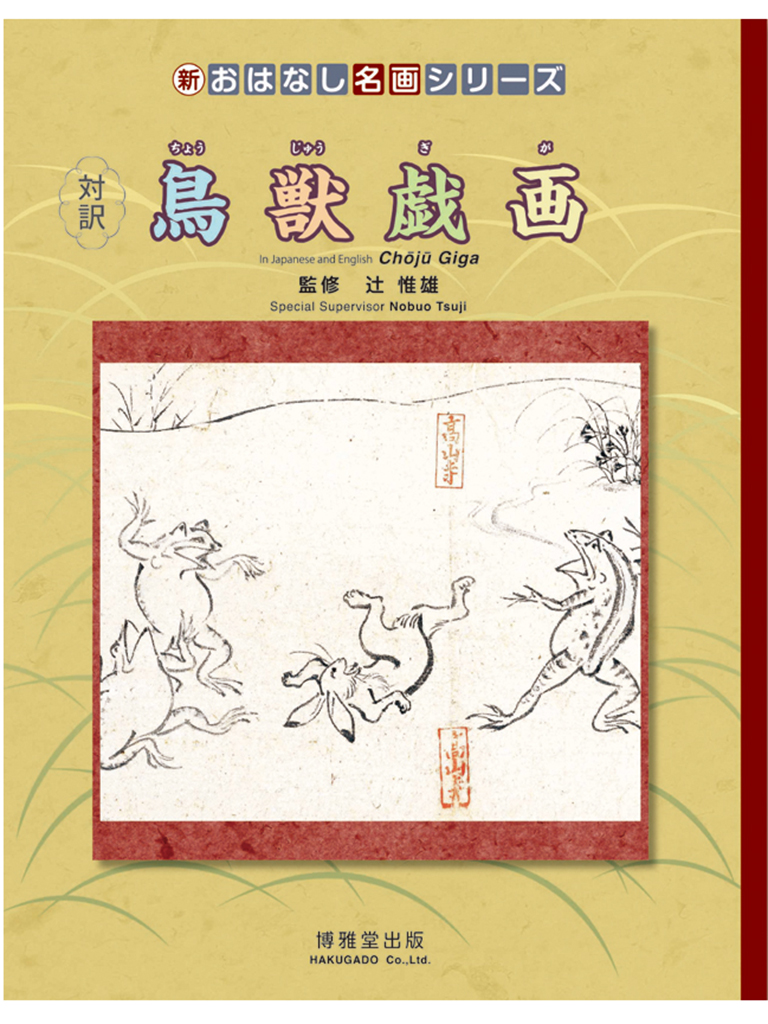
Choju Giga in English and Japanese
Large size (B4 extended format), 36 pages
before-tax price: ¥2,000
Choju Giga, often considered the origin of manga, was handed down for 900 years in a temple in Kyoto. It contains vivid depictions of animals engaged in lively antics.